Accessible, but still overhead diving
Dos Ojos can feel calm and beautiful, but it is still a guided cavern environment. Go with a qualified guide and respect the line, light zone, and site rules.
Riviera Maya cavern diving
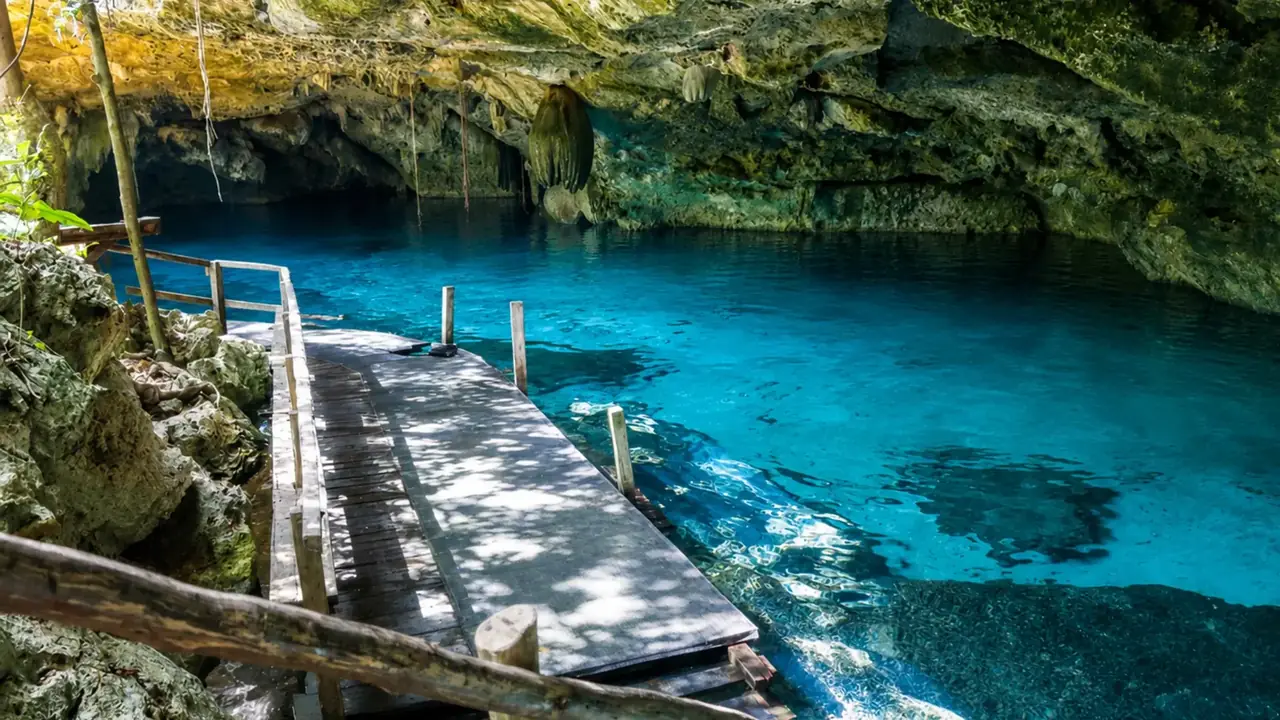
One of the most famous cenote systems near Tulum and Playa del Carmen, known for clear water, dramatic cavern passages, and two connected openings that give Dos Ojos its name.
Why it matters
Dos Ojos is one of the cave systems that helped make the Riviera Maya famous for cavern diving. The name means "Two Eyes," because the two cenote openings connect into a large shared cavern zone.
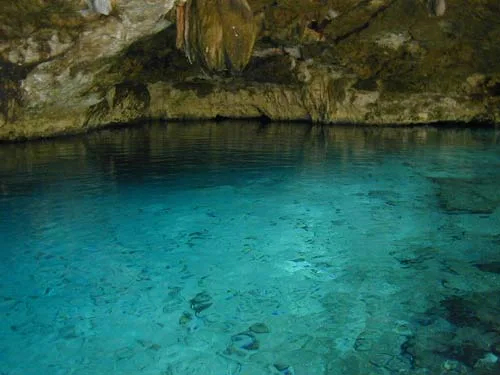
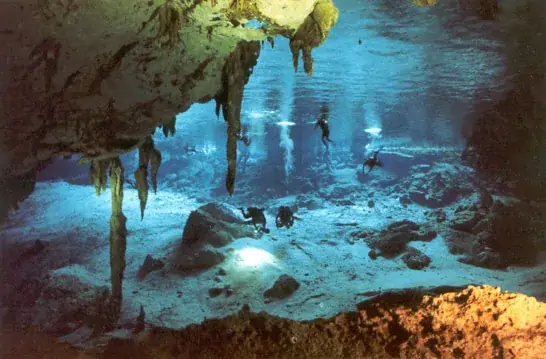
The site is known for very clear water, shallow profiles, limestone formations, and a sense of floating through windows into the underground world. For many certified divers visiting Playa del Carmen or Tulum, Dos Ojos is one of the first cenote dives worth considering.
Dos Ojos can feel calm and beautiful, but it is still a guided cavern environment. Go with a qualified guide and respect the line, light zone, and site rules.
Plan the visit
Depths are generally shallow for cavern profiles, with routes that can give a long, relaxed experience when conditions and guide planning are right.
Review location and route maps before you go. They are useful for orientation, not a substitute for a proper guide briefing.
Send your date, certification level, number of divers, and whether you need equipment, transport, or more cenote options.
What to expect
A Dos Ojos day is less about depth and more about the overhead environment, light, formations, buoyancy, and moving calmly through a protected natural system. For divers used only to reefs, this can be one of the most memorable dives in Mexico.
If you are new to cenote diving, use this site as a starting point, then talk through your experience level and comfort with a local guide before choosing the best route.
Choose the right visit
Go for the cavern routes, clear water, and overhead views. The dive is usually about control, calm movement, and scenery rather than depth.
Dos Ojos can still be worth visiting if you are not diving. The water clarity, rock ceiling, and blue cavern light are the main draw.
If some people dive and others do not, ask before booking. A good plan should avoid leaving non-divers waiting with nothing useful to do.
Practical notes
Bring a towel, water, dry clothes, and your certification card if you are diving. Ask in advance whether entrance fees, guide, tanks, equipment, lights, and transport are included.
Cenote conditions are usually calmer than ocean dives, but the overhead environment makes discipline more important. Good buoyancy, slow finning, and listening to the briefing matter.
FAQ
Certified open-water divers can often enjoy Dos Ojos with a qualified cavern guide, but they should be comfortable with buoyancy and following an overhead-environment briefing.
No. Dos Ojos is also known for snorkeling and clear-water cavern views, especially for visitors who want a cenote experience without scuba gear.
For cavern diving, yes. Stay with a qualified guide and follow the line, light-zone limits, and site rules. Cave sections require cave training and proper equipment.
Bring swimwear, towel, water, dry clothes, and certification card if diving. Ask ahead about equipment, transport, entrance fees, and camera rules.
Ready to ask