|
Cenote
Dos Ojos
|
|
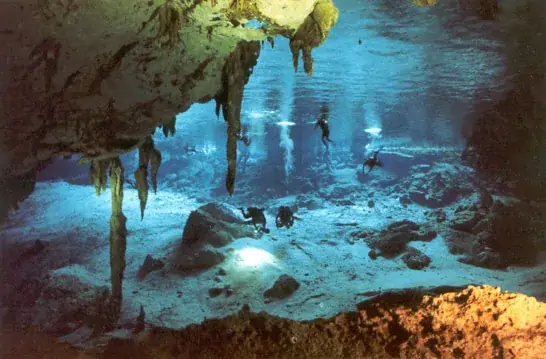
Dos Ojos is a flooded cave system
located south of Playa Del Carmen
and north of Tulum, on the Caribbean
coast, in the state of Quintana Roo,
Mexico. The exploration of Dos Ojos
began in 1986 and has never stopped
since. The documented underwater
extend of the cave system is at
least 61 km.
Dos Ojos has remains in the top 10
longest underwater cave systems in
the world. Dos Ojos contains the
deepest known cave passage in
Quintana Roo with 118 meters / 396
feet of depth located at The Cenote
Pit.
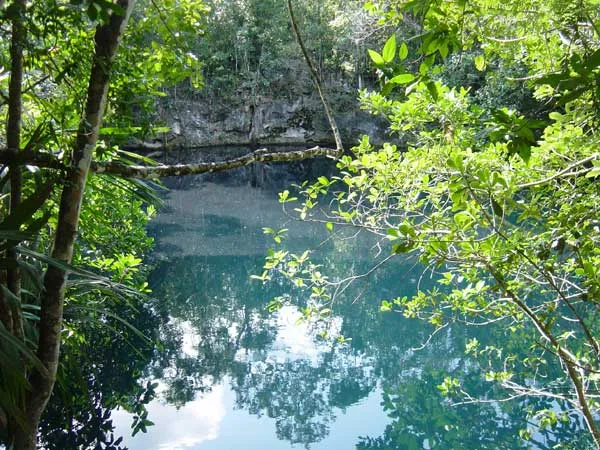
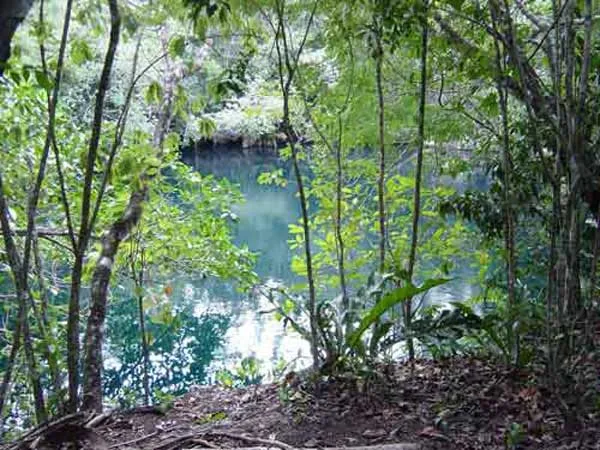
The name Dos Ojos is Spanish for two
eyes, and refers to two neighboring
cenotes which connect into a very
large cavern zone shared between the
two. These two cenote appear like
two large eyes into the underground.
Some of the underwater cave were
featured in an IMAX Film in 2002,
Journey Into Amazing Caves. Parts of
the Hollywood 2006 movie The Cave
was filmed in the Dos Ojos cave
system. However this movie really
sucked.
Water temperature is 24 to 25 °C (77
Fahrenheit) throughout the year and
the maximum depth near the Dos Ojos
Cenotes is approximately 10 m (33
feet). The water is exceptionally
clear.
There are a few varieties of fish
living in the cavern and two types
of freshwater shrimp.
Their is also a Bat Cave that you
surface in to see the bats
|
| |
|
|
| |
Map
of Cenote Dos Ojos courtesy of
www.underwatereditions.com |
|
|
|
| |
Location:
17 Kilometers North of Tulum |
|
| |
Hours of operation: 8:00am -5:00pm /
everyday of the week |
| |
Bathrooms:
Yes |
|
| |
Restaurant on site- nothing even
close (bring lunch if you are staying) |
| |
Distance from gear up to water: very
short walk and down stairs (easy) but
wear shoes and walk carefully on the
stairs and decking. |
| |
Cavern Dives: Max depth 10 m / 33ft
(cavern zone) easily a 45 minute dive or
more on a cavern tour, permanent gold
guideline in place. You can do 2
cavern dives here, completely different
one from the other and go to the famous
bat cave. |
| |
Cave Dives: But of course. Ask
your local guide for the best dives. |
| |
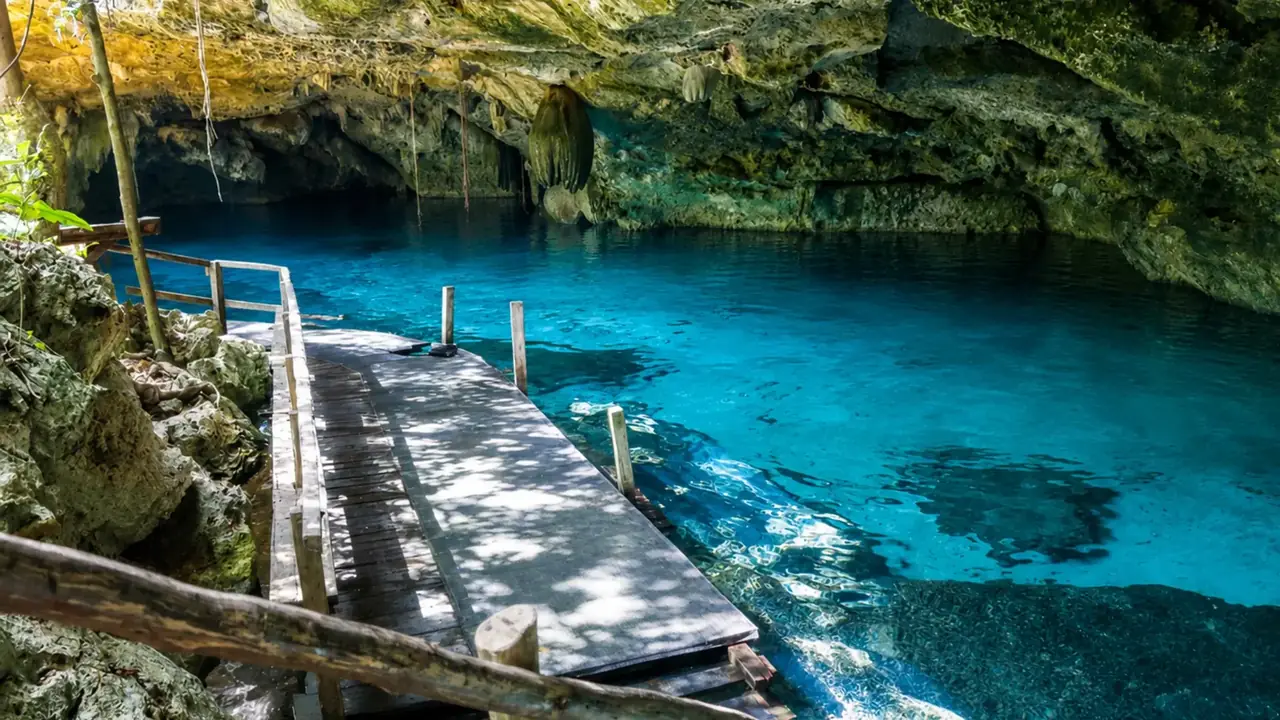
Snorkeling: The whole family can
find something to do in the water here.
Shallow on one side and deeper on the
other. Large wooden deck area up
entering makes a great entry point. One
of the most rewarding snorkeling areas
for adventurers of all ages. |
| |
|
|
|
|
| |
|
|
|
|
Helpful Hint for a more fun experience
Propulsion Techniques:
The following description is one of the recommended
techniques for cavern and cave diving the cenotes of the
Riviera Maya.
Modified Flutter Kick
Picture
provided by S.Gerrard
The Cenotes of the Riviera Maya
To Purchase this book click on the links "its a Good
one to have "
The diver is looking straight ahead, swimming horizontally
and moving the ankles only in a casual, alternating style,
bending the knees and holding firmly in place. The technique
is the most common used in cavern and cave diving.
Rules to follow for all
cenote dives:
*No decompression.
*Penetration: max. 200 feet (60m) from opening.
*Depth max. 70 feet (21m).
*Minimum visibility of 40 feet (12.5 m).
*Large with no restrictions.
*Area with ceiling and some visible light.
Environmental Concerns:
Please help us to preserve these fragile cenotes. Dive
gently!
*Take nothing.
*Reduce drag from equipment.
*No grabbing or pulling speleo themes.
*Try not to touch sediments.
Techniques:
Buoyancy & Propulsion:
*Minimize weight and do a buoyancy check before the dive.
*Neutral buoyancy wanted.
*Gentle kicks from the knee and ankle, not the hip.
Body Position:
*Head down slightly, body horizontal
*Mid-water positioning, stay off bottom and top.
Communications:
Light & Hand Signals:
Our Certified Full Cave Guide will go over all signals with
you before the dive.
|